
Monday, 13 May 2013


Tuesday, 30 April 2013
Rituals
Sunday, 21 April 2013
Design Choices – Contextualisation
In our performance, as in all, the designs for the set and
the costumes are of huge importance to our performance as they communicate a
lot about our theme and the message of the piece that we are trying to get
across to the audience. Throughout our set and our costume there is a common
running theme of the British and the African culture being mixed together and
intertwined. This shows in the set that the British are imposing their culture
trying to colonise them with the British culture. It also shows how two
opposing cultures have met and for some, especially those in the lost, it is
about making the two cultures and worlds work together and to get along as best
as they can. This is demonstrated mainly in our costumes, as the African
costumes have small elements of British in them to show how the culture have
intertwined and that the British are slowly taking over their native land.
Every element of our set says something about our theme even
down to the rocks. The rocks show the world and natural environment that the
play is set in. For the characters that have come off the boat, they have
entered a world that is different to the world that they have left, in terms of
culture, but also in terms of weather and heat. The rocks show that the country
they have entered is a dry one, without a lot of water and the main natural
element to it is the rocks and the lack of trees show that it is hard for
plants to grow there, showing that it is a hot country. This is really important
for the characters from the main land to understand and to take into account as
they wouldn’t have been used to this amount of heat and lack of water, so it
would have a huge affect on their physicality and the way that they move. Also
it could affect them mentally as the heat and lack of water could make them
delirious and start to hallucinate. However the rocks also hold a lot of
symbolism in them, as with the lack of trees and the only thing able to survive
on the land is non-living things, could show what the British have done to
their country and their culture. It could suggest that the British have come in
and stripped everything bright and colourful in their land and in their culture
till all that is left are emotionless beings. It as the only things that are
still around is dead natural element it could suggest that the British have
been brutal with their take over of the country and that they killed everything
that thrived in that land and culture so that they aren’t a threat to them.
Also on the set we have a shrine to Queen Vic, this not only
gives some contextualisation to our piece of theatre and to our audience so
that they can clearly understand the time that it is set in, but it also stands
out in that world for a reason. Queen Victory isn’t someone who should or would
have been associated with the natives culture, however by having it in there
land, it shows that how the British and the British culture has imposed and
forced itself on the natives culture and their world. It also acts as a way of
claiming the land, like when the Americans landed on the moon they put an
American flag on it, the shrine to Queen Vic gives a sense of claiming and
ownership to the land, its as if they have arrived there and taken over the
land and forced the natives to bow down to their monarch and consequently their
culture.
Also all over the set, on the rocks, on Prospero’s house and
on the shrine, there are aluminous, bright colours that glow in the dark. These
are really important to the set and to the play as a whole as the represent
Prospero’s power over all of the land. As in our version of the play Prospero
is a witchdoctor and he is uses his drugs, which are paints, to control people
and to keep him in power. By having the paints, showing the drugs, covering the
set, it shows how he has manipulated the country so that he can stay in power
and so that he can control everyone and everything around him. It shows how
everyone is constantly drugged so that he can dictate over them.
Thursday, 18 April 2013
SHAKESPEARES WORLD – HISTORY AND SOCIETY
At the end of Henry 8th reign it can be
considered as the transition into the new modern world. As this is the time
that when the New World – America was discovered, printing came about,
Protestant became the more prominent religion in Britain with the monarch being
the head of the church and a new class was created in society – the middle
class, with more people being educated. This created the Renaissance or
enlightenment era, an era of creativity, from Greece
Henry 8th changed a previously Catholic society
into a Protestant one. The main trigger for the change was that he wanted to
divorce his first wife, Catherine of Aragon, however the pope would not allow
this divorce so as a way of achieving it Henry changed to a Protestant and the
country changing to Protestant as well, and along side that made the monarch,
himself, the head of the Protestant church in England. Although Britain
After Henry’s death there was four monarchs in the space of
eleven years: Edward 6th who was ten years old, so he had a lot of
people to run the country for him and ran it as a Protestant country, he died
in 1553. After he died, Lady Jane Grey came in as the next monarch, although
not next in line to the throne, Jane was a Protestant and when Edward became
ill precautions were put in place to make Jane the next Queen as Mary was a
Catholic and they didn’t want the country to go back to Catholicism. However
Lady Jane Grey was only Queen for seven days and then was beheaded by Mary’s
men and Mary came into power and her reign began as Queen Mary or Bloody Mary.
In Mary’s reign the country was turned back to a Catholic country and in her
reign there was a lot of murder and she got quite bad a reputation, for example
she had 300 heretics burnt at the stake. After Mary died, her younger sister Elizabeth Elizabeth
This is really important that we understand the state of the
country that Shakespeare was born into and when he was writing, as that would
influence his plays that he would put on. In our society now there isn’t
censorship on the media so in contemporary theatre, playwrights have freedom to
write and produce plays with whatever content in them, and able to say whatever
they want. However when Shakespeare was writing he had to be very careful with
what he put into his plays as if he offended the monarch or showed himself
against the religious aspects of the country at that point in time, he would be
arrested or in those times even killed. This meant that when he was writing he
had to be very aware socially of what was going at the time as he wouldn’t want
to put his own life at risk. Also for Shakespeare this was a way of making money and he would have had to write plays that would please the audiences and would pull in large audiences to the theatres so that he would make money and be able to live and feed his family.
NEW WORLDS
NEW WORLDS
Even though when the British went to the new worlds there
was many benefits for them as they got new foods, medicines and cultures, they
often didn’t understand the natives of the country they had found and this is
shown in Shakespeare’s naming of what one could call the Noble Savage: Caliban
(although some may argue that Ariel is more of a Noble Savage, especially in
our performance of The Tempest.) Caliban sounds like cannibal that comes from
Carrien or Caribbean . This shows how the
British thought that those from the Caribbean
and most likely those from African or Indian countries were cannibals. This
came from the British not understanding their culture and not knowing or seeing
them as people but as animals, as they thought them uncivilised, because they
know nothing of or understood their world or ways of life. This was so thought
that a book in 1603 was written called “Of Cannibals” by Montaignt, this shows
how it was widely accepted and normal in the society that they lived in. Also
the timing of the book being written and published links in to the writing of
The Tempest, suggesting that Shakespeare could have got some of his influences
from it. This is supported by Gonzalo’s speech in Act 2, Scene 1, which is of
great similarity to a passage of writing in the book. This is of Gonzalo
speaking about a utopia that he wants to find and to live in, where there is no
private state or labour but equality for everyone. This is very interesting as
to the characterisation of Gonzalo as his opinions are political and
sociological opinions that have been around though out the years and are still relevant
today. This allows us to contextualise the play and the characters in a political
way as we see Gonzalo present a more liberal political view, where as it could
be argued that Prospero shows an extremist right wing political opinion and
could be seen as a dictator over the island. This could have contextualise the
play in a political point of view as the conflicts in the political world are
constant throughout history and as Shakespeare and most writers write in
reaction to their society at the time, it could show how he is writing about
the politics of the time, which is still relevant in our society and to our
audiences today.
Thought this was too good not to be on my blog :) .... but on a more educational note:
http://www.youtube.com/watch?v=YYfM0RFZ5cs
http://www.youtube.com/watch?v=YYfM0RFZ5cs
(sorry it wouldn't load as a video)
Sunday, 14 April 2013
My Character Based On A Real Person
The real person I found that I am going to base my character on is Sarah Bishop, although she has had fiction based on her, I am only looking at the real facts about her. Sarah Bishop, from New York, was a victim of a British raiding party in I778. She got taken aboard a British privateer; she became a member of the crew with certain additional duties. Although she handled the wheel and stood watches, she was also expected to be a communal sex object, rape was a common occurrence in war times and on ships it wasn’t seen or considered wrong as the men had to have their pleasure some how. Over time Sarah and the captain of the privateer came to an understanding, after which she was strictly the captain's woman. However the captain was killed in an engagement with an American privateer, and it was another six months before Bishop found an opportunity to escape. It took two whole years after she was first captured to escape and Sarah Bishop slipped over the side of the ship and swam ashore at
Later accounts say Bishop was forced to serve the crew
aboard a British privateer. Some websites list her among female pirates. Some interpreted
this account more realistically to present Bishop as a victim of rape and,
possibly, post-traumatic stress syndrome
In 1839, the New England
Gazetteer reported:
“She lived on Long Island at the time of the Revolutionary war. Her
father’s house was burned by the British, and she was cruelly treated by a
British officer. She then left society and wandered among the mountains near
this part of the state: she found a kind of cave near Ridgefield
The Democrat of
“Sarah Bishop, (for this was
the name of this Hermitess) is a person of about fifty years of age. About
thirty years ago [i.e., 1774] she was a young lady of considerable beauty, a
competent share of mental endowments, and education; She was possessed of a
handsome fortune, but she was of a tender of delicate constitution, and enjoyed
but a low degree of health; and could hardly be comfortable without constant
recourse to medicine, and careful attendance; and added to this, she always
discovered an unusual antipathy to men; and was often heard to say that she had
no dread of any animal on earth but man. Disgusted with them, and consequently
with the world, about twenty-three years ago [i.e., about 1781], she withdrew
herself from all human society...”
Friday, 12 April 2013
GLOBE
When Charles become King he brought back theatre to Britain as in his life he spent time in France
At the time Shakespeare was writing the focus in theatre was
on the language being said rather than the physical action, because of this the
actors had no rehearsal time and only had one read through the day before the
performance, they learnt their lines for the show and then performed without
any direction. This being the norm, in Shakespeare’s writing there is some
stage directions but also in the language of the line for the characters. This
gave the actors some direction of what to do on stage and also what Shakespeare
intended for the performance. For us now performing Shakespeare it is really
interesting to notice these indications left by Shakespeare as it shows us elements
of our character such as how they would react in a certain situation by
indicating whether they would move away from a scary or intimidating situation
or stay strong.
Traditionally Shakespearian theatre is formed of a basic
reading of the language. As they don’t have rehearsal time they didn’t
contextualise the language as we are doing now with our piece as we link it to
the African theme and what could be meant or message being said by Shakespeare
in the language. As a result of this thee performance had very little meaning
than that of what Shakespeare meant by it, unlike us where we have a director
and company to put another tone on top of the piece, in Shakespearian times the
performances would simply about the words and the message of the words not a
deeper or underlining message. As well as this traditionally when performed in
Shakespearian times the lines would be declaimed when they were spoken. A line
could be thrown away very easily in a scene. Consequently the lines would have
very little emotional attachment or objective connected to them, this would
make the performances full of stereotypes as the actors didn’t look deeper into
the characters. Also because of the lack of emotional attachment to the line
and as theatre at the time was focused on the language the body was very
detached from the words and action that was taking place on stage.
When we saw the performance at the Globe one thing that we
noticed was the decoration on the stage and the building as a whole. There was
paintings of the Zodiac sign, which represents the world, this is important as
it shows how the theatre takes in everything about the world and all aspects of
the world can link into theatre. The top of the building with the open roof
represents the heavens being above, making hell below. This was also mimicked
by the seating arrangements of the audience as the higher in class you were the
higher in the audience you would sit with the peasants being the groundlings
who only paid one penny and had to stand, it was believed then that the higher
class you were, the more money you had the closer to God you were as he had
given you that wealth, this links to the idea that the theatre is set our as a
world with heaven and hell watching it. This was also highlighted by the two
trap doors that are on the stage which also can indicate to the
characterisation of certain characters. One of the trap doors represents heaven
while the over comes up from the bottom showing hell. Shakespeare would use
these to his advantage and if a character came up from the bottom trap door it
tells the audience that this is a dark character that is devilish. To support
this other actors would make the sound effects as a character came up from the
hell trap door as they would make the sound of hounds crying and crows, this
played on the audiences superstitions and made the character even more frightening
to the audience. This helps us as actors now as we can look into the language
used by Shakespeare and his given stage direction as it tells us if our
character has a certain superstitious quality to them or if they are a hero and
close to God or the opposite. Other than these trap doors there was no
elaborate set or scenery and the lighting would come from the natural light
from the outside as performances would take place in the afternoon or later on
they got lighting from burning limestone. Because of the lack of scenery the
actors and writers also relied on the audience by asking them to use their
imaginations in create the set, for example in Macbeth and Romeo and Juliet
Shakespeare writes into the line that it is dark, allowing the audience to
create the world of the play in their minds. This is really interesting to us
actors as it shows us what was expected to of the audience in that time and
when comparing this to theatre now and how we could use the language to get the
audiences attention like they used to and to engage them as Shakespeare
expected them to be engaged.
However they would have costumes to use in the performances
and were hugely important as other than the writing they were the only thing
other than the words that they had to set the scene for the audience. The
costumes were often donated by patrons of the theatre and consequently they
could be really expensive clothing of high status people. The language and the
costume was what was used mainly in Shakespearian times to set the scene, the
time and the place, so they played a huge part in the performance.
At the back of the Globe stage are two doors leading to
backstage or as it was called the tiring house, where they would change
costume, with the stage wall being covered by a curtain. Above the stage wall
is a gallery which has the musician in it. This shows the importance of music
in Shakespeare’s plays. Also in the gallery, really rich people would pay to
sit there, even though they had a bad view. This was because going to the
theatre for the rich was about showing off their wealth and a socialising event
rather than watching the performance. By sitting in the gallery those who sat
there would have all the other audience members watching them and they would
peacock to show off their power and wealth. On the stage there were also two
pillars that are made of tree trunks, these hold up the roof and the heavens.
Behind them there was the frounts scenan.
The role of the audience has changed massively over time as
now they sit quietly and rarely respond vocally or physically to the
performance, in Shakespearian times the audience were heavily involved in the
performance. Often the audience’s would be very drunk especially the
groundlings and this meant that they were very rowdy and loud. During the
performance they could talk, joke, and throw things if they weren’t enjoying
the performance but also they listened to the words of what was being said as
this was what was important to them in the theatre. However the main thing about
the audience to know is that they were uncontrollable and interacted with the
actors largely with lines being said directly to them. This is really
interesting for us to know as this is something that our audience will not be
used to that and as we are trying to get this in our performance we have to
understand that the audience may not be used to it but I think we need to be
able to bring in these lines and to use them in a really effective way that
won’t make them look or sound cheesy. It shows us how there was no separation
between the audience and the actors, unlike Checkov the audience weren’t to be
made to believe that we were in a different world to them but that they are
with the actors.
How do we
contextualise the performance compared to Shakespeare:
|
Difference
|
Similarities
|
|
Sound effects
|
Costume
|
|
Lighting
|
Thrust stage
|
|
Set
|
Voice projection
|
|
Style of Acting – unification of emotion, gesture and word
to make a character
|
|
|
Story set on interaction no words
|
Two scenes at once
|
|
Amount of rehearsal time
|
Using music
|
|
Director
|
Song in curtain call
|
|
Contextualise – put theme on
|
Interact with audience
|
|
Abridged version
|
|
Measurements of the
Globe:
Height – 5 feet
Width – 45 feet
Length – 30 feet
People – 600 in the pit and 900 seated
Sunday, 7 April 2013
CONTEXTUALISATION - MODERN AUDEINCE
Our version of The Tempest is set at the begging of the end
of slavery, around the 18Th and 19th century, and one of
the issues that we need to consider is how we were going to make it relevant to
a modern audience especially as it is written is Shakespearian language. We
thought that it could be quite easy for our audience to be alienated by the
fact that it hasn’t got a modern or timeless setting as they may feel like it
doesn’t relate to them or that our message is simply commenting on the past and
not saying anything about our society now. However I think it is important to
remember that the end of slavery wasn’t that long ago and still relevant in
modern history as relations between different races are still a prominent part
of our modern society. So I think that our message about Colonialism and
slavery is still relevant to the suppression that conceits in our society and
recent society.
One thing that makes our concept and performance so relevant
to a modern audience is that it confronts their morals and challenges they way
that they think. Although slavery wouldn’t be something that our audience may
have been directly involved or linked with however it challenges their history
and the country that they are a part of. It challenges the political and historical
structure of our society. It challenges the outlook that we have on our
history, as a country England has always been one of pride and traditionally
the I think we have always found it hard to accept or admit or wrongs as we
have so often been at the worlds powers, in our performance I think, with the
use of hindsight, we confront our audiences morals by making them question our
counties past and choices that were made on behalf of our nationality. It does
this by offering a perspective on the past and questioning what we did as a
country and how it affected those around us.
It also makes a cultural comment as in our version some of
the characters, such as Caliban are based on real people. This makes our version
more connected to the cultural aspect that we are exploring as it looks into
real people, how they were affected by the true events that we are exploring.
This could make our audience; even though they are modern, more connected to
our piece of theatre as it has a raw realness to it making the characters even
more believable and connectable.
Tuesday, 2 April 2013
Shakespeares Inspiration
One of the most common theories of what inspired
Shakespeare to write The Tempest is a real shipwreck that happened in 1609 in
the Bahamas Jamestown
in Virginia Bermuda 150 people
and a dog were saved but many thought they were lost at sea. Although in after the crash many of the British struggled to
adapt to survive in this new country and as a way of survival they asked the
natives for help and once they had grown accustomed to the new world they lived
in and became stronger they killed the natives who had once helped them and
claimed their land, this is a start to colonialism. Some of those shipwrecked lived on the island for 10 months
and within that time built two boats to journey back on. From this experience a
new country was discovered and colonialism began.
Back in London Jamestown
For a contemporary performance of The Tempest it is important to know the background and inspiration for The Tempest as we can find parallels for it in the modern world. For example we can link the colonisation for new lands and worlds to the discovery in science and space, such as the race between Russia and America to put a man on the moon. This discovery of new worlds and wanted to own and claim them as one owns. This gives contemporary audiences a universal understanding as there is a common link in humanity and people in societies to want to show off their power by claiming new worlds that is still relevant to us today.
For a contemporary performance of The Tempest it is important to know the background and inspiration for The Tempest as we can find parallels for it in the modern world. For example we can link the colonisation for new lands and worlds to the discovery in science and space, such as the race between Russia and America to put a man on the moon. This discovery of new worlds and wanted to own and claim them as one owns. This gives contemporary audiences a universal understanding as there is a common link in humanity and people in societies to want to show off their power by claiming new worlds that is still relevant to us today.
Monday, 1 April 2013


The Globe Space
I think it was really interesting and helpful to look at the Globe stage and to watch people perform on it for many reasons.
I thought it really put performance into context for me as it showed me what space actors in Shakespearian had to perform in and how they would have conducted themselves to make sure that they always were connecting and including with the surrounding audience. One thing a noticed about the actors is that they seemed to have a constant energy within them, I thought that this was good because they used this energy to make sure that every person in the audience was included in the performance. They did this through their movement and command of the stage, although I thought they didn't always get the balance right in controlling their energy as at some points it felt as if they were just running around for no reason. However I do think that they used the stage well and were able to address all members and areas of the audience and personally I think that this is really important because it means that all of the audience gets to enjoy the performance and to connect with the characters as they are able to see them and to be able to be emotionally part of the performance. I think this was really useful to watch as it shows me as an actor who is working in a thrust stage like the Globe is, how to be able to do a performance that includes all the audience but without looking forced or unnatural. I think on of the issues I personally face when it comes to performing in the Thrust is trying to give an honest and truthful performance, allowing my character to move naturally but at the same time opening the performance up to all sides of the audiences, so I think that watching another performance in a Thrust stage was really useful to experience it as an audience member to understand what I want from the actors to make me feel engaged.
I also think that contextually it was really interesting to watch a performance at the Globe because it showed us how it would have been performed in regard to the spacing that the performance took place in it. This allowed me to understand what Shakespeare was writing for and how he would have visualised his performance when he was writing as it would be performed in that space. This could show us how he may have written certain characters or their characteristics for the performance space, for example the more comical characters may have been given certain lines or characteristic's that would connect with the audience because they are so close to them, this could be argued that it gives us an insight to the characters and how they may be performed.
I thought it really put performance into context for me as it showed me what space actors in Shakespearian had to perform in and how they would have conducted themselves to make sure that they always were connecting and including with the surrounding audience. One thing a noticed about the actors is that they seemed to have a constant energy within them, I thought that this was good because they used this energy to make sure that every person in the audience was included in the performance. They did this through their movement and command of the stage, although I thought they didn't always get the balance right in controlling their energy as at some points it felt as if they were just running around for no reason. However I do think that they used the stage well and were able to address all members and areas of the audience and personally I think that this is really important because it means that all of the audience gets to enjoy the performance and to connect with the characters as they are able to see them and to be able to be emotionally part of the performance. I think this was really useful to watch as it shows me as an actor who is working in a thrust stage like the Globe is, how to be able to do a performance that includes all the audience but without looking forced or unnatural. I think on of the issues I personally face when it comes to performing in the Thrust is trying to give an honest and truthful performance, allowing my character to move naturally but at the same time opening the performance up to all sides of the audiences, so I think that watching another performance in a Thrust stage was really useful to experience it as an audience member to understand what I want from the actors to make me feel engaged.
I also think that contextually it was really interesting to watch a performance at the Globe because it showed us how it would have been performed in regard to the spacing that the performance took place in it. This allowed me to understand what Shakespeare was writing for and how he would have visualised his performance when he was writing as it would be performed in that space. This could show us how he may have written certain characters or their characteristics for the performance space, for example the more comical characters may have been given certain lines or characteristic's that would connect with the audience because they are so close to them, this could be argued that it gives us an insight to the characters and how they may be performed.

Sunday, 31 March 2013
In my opinion the play is centred around Prospero as he is the character that holds all the power over the other characters and the plot of the play. I feel that Prospero has a lot of magical control over the other characters in the play so I feel it is important to know a lot about the character of Prospero as he impacts massively on the play and arguably all the characters in the play. I think it is especially important for us to research into the character of Prospero as we have changed him slightly from the original Shakespearian writing as a magician into a Witch Doctor, so it is crucial to know how he can still hold that amount of power over the characters as a magician can. I think that this is supported by how important and high status Witch Doctors hold in their communities as they are what members of the community look up to and trust in.
The way that spells are cast are really interesting to look into as it can provide us with different ideas of way that the spells could be cast in our performance, making it more realistic and true to the culture that we are trying to take on and show to the audience. It is also another way that can give Prospero power over the others, through the different ways that he can control the others. Also when looking at it in a theatrical way I think that it would be really visually pleasing and spectacular to watch all different types of spells being cast in different ways because it would bring colours and music, such as the drumming, and medical instruments to the stage. I also feel that it would bring the audience into the world of the play as they would be immersed in the culture of the community as it will take them into the place that they might not know, which I think is really important as it brings the audience in and makes an impact on them which all theatre should do.
The way that spells are cast are really interesting to look into as it can provide us with different ideas of way that the spells could be cast in our performance, making it more realistic and true to the culture that we are trying to take on and show to the audience. It is also another way that can give Prospero power over the others, through the different ways that he can control the others. Also when looking at it in a theatrical way I think that it would be really visually pleasing and spectacular to watch all different types of spells being cast in different ways because it would bring colours and music, such as the drumming, and medical instruments to the stage. I also feel that it would bring the audience into the world of the play as they would be immersed in the culture of the community as it will take them into the place that they might not know, which I think is really important as it brings the audience in and makes an impact on them which all theatre should do.
How Witch Doctors in Africa
Have a Community under Their Spell
No matter where you go in the world you'll find some form of witchcraft
being practised; either as a religious ritual, a medical practise, or a form of
New Age divination. But for witch doctors in Africa ,
their practises are a combination of all three. That makes them very powerful
and influential within the communities in which they live.
African witchcraft is very different from most of the other forms found
around the world. Perhaps its unique history has a lot to do with it.
Witchcraft in Africa far supersedes what was found in Europe
in the 14th and 15th centuries and, in fact, anthropological studies trace its
history back to a combination of Egyptian witchcraft and Arabic Sihr.
Unlike European witchcraft, which tends to focus on the idea of demons
and evil spirits, African witchcraft is more focused on the concept of magic
and spells. Witch doctors in Africa believe
they can, through various potions and practises, influence the future of a person's
life -- either for good or evil. That gives them great influence among those in
their community.
Add
the Superstition to Witchcraft
The other problem facing African nations is a cultural superstition that
pervades just about everything in society. For example, when crops fail
superstition causes people to believe they have been cursed. Likewise when farm
animals die, children get sick, houses burn down, or anything else goes wrong.
Furthermore, if these things are curses then they must be the result of
unacceptable behaviour by someone in the community. Unfortunately, traditional
African cultures always look for the weakest members of society to blame. That
includes the albino population who, according to witch doctors, are not even
real people; they are ghosts or spirits sent to curse a community.
Albino
Body Parts Are Magic
The last piece of this puzzle can be found in the belief among witch
doctors in Africa that albino body parts have
mystical, magical properties. They use these body parts to make potions and
cast spells that allegedly make people wealthy and prosperous. You can imagine
how willing a person might be to kill an albino in order to create a bright
future for himself.
Unfortunately, that's exactly what happens. In the eastern African nation
of Tanzania
Although Tanzania 's
albinos are suffering greatly, there are very few organisations like Southern Africa 's Children (SAC) working on their behalf.
SAC sponsors albino children to provide them with clothing, food, medicine, and
tuition at eithre local village schools or if the albino child is orphaned at a
safe and secure boarding school. The organization has opened up a community and
education centre on Ukerewe
Island
WITCH DOCTORS
Witch Doctor is term that for centuries has been used
to describe a medical person who is believed to heal through magic and
witchcraft. Most witch doctors used potions made of herbs that offered true
medicinal value. Some historians claim that these early physicians and many of
the potions they created probably led to modern medicine. Mentions of witch
doctors are commonly found in early African literature, but could also be
applied to early folk medicine worldwide. In various parts of the world, early
medical practitioners might have been referred to as shamans, healers, or wise
men or women.
In ancient history, especially in small towns and
villages, a witch doctor was often the only medical practitioner available.
They commonly assisted in childbirth, tooth extraction, and medical emergencies.
However when their healing methods failed, it was common for the witch doctors
to blame it on the displeasure of the gods or the unworthiness of the patient.
In this way, they were able to maintain their stature even though their
treatments were often unsuccessful. As a form of payment, witch doctors received food, clothing, weapons and
other valuable things from their patient. They are however, slowly diminishing as
a result of the rise in modern medicine. But witch doctors still exist and are
still highly regarded by his or her people.
African
Witch Doctors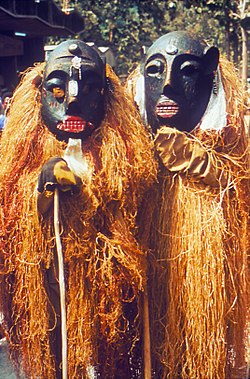 There
are two main types of traditional healers in African societies: the deciner
(sangoma) and the herbalist (inyanga). In essance these are shamans who are of
high social power and status within the societies, having a strong influence on
all elements, even politics. In these societies illnesses are believed to be as
a result of witchcraft, pollution or negation of the ancestors.
There
are two main types of traditional healers in African societies: the deciner
(sangoma) and the herbalist (inyanga). In essance these are shamans who are of
high social power and status within the societies, having a strong influence on
all elements, even politics. In these societies illnesses are believed to be as
a result of witchcraft, pollution or negation of the ancestors. Traditional healers in
How spells are cast
Through ritual and animal sacrifices, healers believe that the ancestors must be shown respect; they feel that this will bring them a trouble-free life and create harmony and strength between the living and the dead. They summon the ancestors through many types of rituals and potions: burning sacred plants like imphepho (Helichrysum petiolare), dancing, chanting, channeling or playing drums. Traditional healers will often give their patients muti—medications made from plant, animal and minerals—imbued with spiritual significance. These medicines often have powerful symbolism; for example, lion fat might be prepared for children to promote courage. There are medicines for everything from physical and mental illness, social disharmony and spiritual difficulties to potions for protection, love and luck.
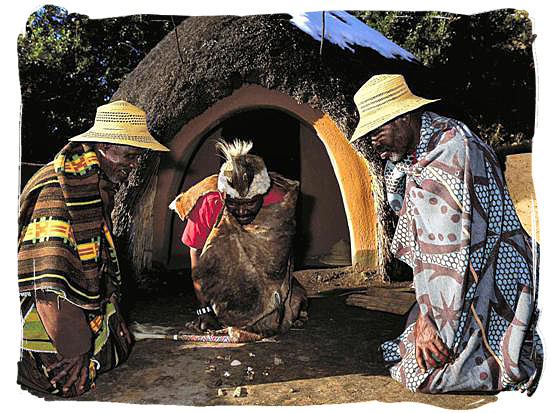 Sangoma is a Zulu term that is
used to describe the traditional healers, there are actually many different
types within this term referring to the different ways that they heal or cast
spells. An inyanga is concerned mainly with medicines made from plants and
animals, while a sangoma relies primarily on divination for healing purposes
and might also be considered a type of fortune
teller. In modern times, colonialism,
urbanisation,
apartheid
and cross-cultural mixing have blurred the
distinction between the two and traditional healers tend to practice both arts,
and the traditional healers can alternate between these roles by diagnosing
common illnesses, selling and dispensing remedies for medical complaints, and
divining cause and providing solutions to spiritually or socially centered
complaints.
Sangoma is a Zulu term that is
used to describe the traditional healers, there are actually many different
types within this term referring to the different ways that they heal or cast
spells. An inyanga is concerned mainly with medicines made from plants and
animals, while a sangoma relies primarily on divination for healing purposes
and might also be considered a type of fortune
teller. In modern times, colonialism,
urbanisation,
apartheid
and cross-cultural mixing have blurred the
distinction between the two and traditional healers tend to practice both arts,
and the traditional healers can alternate between these roles by diagnosing
common illnesses, selling and dispensing remedies for medical complaints, and
divining cause and providing solutions to spiritually or socially centered
complaints. In healing a sangoma's try’s to establish a balanced and harmless relationship between the afflicted patient and the spirits that are causing their illness. The healer intercedes between the patient and the world of the dead in order to make restitution. This is generally performed through divination- throwing the bones or ancestral channeling-, purification rituals, or animal sacrifice to appease the spirits through atonement.
Divination performed by Sangoma is the reading of the bones after they have been thrown. This will be one way that the Sangoma will access the ancestors and advice given by them. In a session, the Sangoma will determine what the affliction is and then either the patient or diviner throws bones on the floor, which may include animal vertebrae, dominoes, dice, coins, shells and stones, each with a specific significance to human life. One example of this is the hyena bone which signifies a thief and will provide information about stolen objects. After the bones have been thrown, it is believed that the ancestors determine how they fall and then the Sangoma reads and interprets them in relation to the patient’s life and how to resolve their problem. The Sangoma will then give the patient a course of medicine to take or referrer them to a herbalist.
Drumming and Rituals
Sangoma can also be translated as 'person of the drum' or 'the drumming one', as drumming is an important part of summoning the ancestors. During times of celebration the possessed sangoma is called to dance and celebrate their ancestors. The sangoma falls into trance and the ancestors will be channeled, which appears to be through episodes of convulsive fits. This is followed by the singing of ancestral songs. These songs are echoed back to the ancestor via the audience in a process of call and response. The possessed sangoma will then change into their traditional ancestral clothing and dance vigorously while others drum and sing in celebration.
Subscribe to:
Comments (Atom)