In my opinion the play is centred around Prospero as he is the character that holds all the power over the other characters and the plot of the play. I feel that Prospero has a lot of magical control over the other characters in the play so I feel it is important to know a lot about the character of Prospero as he impacts massively on the play and arguably all the characters in the play. I think it is especially important for us to research into the character of Prospero as we have changed him slightly from the original Shakespearian writing as a magician into a Witch Doctor, so it is crucial to know how he can still hold that amount of power over the characters as a magician can. I think that this is supported by how important and high status Witch Doctors hold in their communities as they are what members of the community look up to and trust in.
The way that spells are cast are really interesting to look into as it can provide us with different ideas of way that the spells could be cast in our performance, making it more realistic and true to the culture that we are trying to take on and show to the audience. It is also another way that can give Prospero power over the others, through the different ways that he can control the others. Also when looking at it in a theatrical way I think that it would be really visually pleasing and spectacular to watch all different types of spells being cast in different ways because it would bring colours and music, such as the drumming, and medical instruments to the stage. I also feel that it would bring the audience into the world of the play as they would be immersed in the culture of the community as it will take them into the place that they might not know, which I think is really important as it brings the audience in and makes an impact on them which all theatre should do.
Sunday, 31 March 2013

How Witch Doctors in Africa
Have a Community under Their Spell
No matter where you go in the world you'll find some form of witchcraft
being practised; either as a religious ritual, a medical practise, or a form of
New Age divination. But for witch doctors in Africa ,
their practises are a combination of all three. That makes them very powerful
and influential within the communities in which they live.
African witchcraft is very different from most of the other forms found
around the world. Perhaps its unique history has a lot to do with it.
Witchcraft in Africa far supersedes what was found in Europe
in the 14th and 15th centuries and, in fact, anthropological studies trace its
history back to a combination of Egyptian witchcraft and Arabic Sihr.
Unlike European witchcraft, which tends to focus on the idea of demons
and evil spirits, African witchcraft is more focused on the concept of magic
and spells. Witch doctors in Africa believe
they can, through various potions and practises, influence the future of a person's
life -- either for good or evil. That gives them great influence among those in
their community.
Add
the Superstition to Witchcraft
The other problem facing African nations is a cultural superstition that
pervades just about everything in society. For example, when crops fail
superstition causes people to believe they have been cursed. Likewise when farm
animals die, children get sick, houses burn down, or anything else goes wrong.
Furthermore, if these things are curses then they must be the result of
unacceptable behaviour by someone in the community. Unfortunately, traditional
African cultures always look for the weakest members of society to blame. That
includes the albino population who, according to witch doctors, are not even
real people; they are ghosts or spirits sent to curse a community.
Albino
Body Parts Are Magic
The last piece of this puzzle can be found in the belief among witch
doctors in Africa that albino body parts have
mystical, magical properties. They use these body parts to make potions and
cast spells that allegedly make people wealthy and prosperous. You can imagine
how willing a person might be to kill an albino in order to create a bright
future for himself.
Unfortunately, that's exactly what happens. In the eastern African nation
of Tanzania
Although Tanzania 's
albinos are suffering greatly, there are very few organisations like Southern Africa 's Children (SAC) working on their behalf.
SAC sponsors albino children to provide them with clothing, food, medicine, and
tuition at eithre local village schools or if the albino child is orphaned at a
safe and secure boarding school. The organization has opened up a community and
education centre on Ukerewe
Island
WITCH DOCTORS
Witch Doctor is term that for centuries has been used
to describe a medical person who is believed to heal through magic and
witchcraft. Most witch doctors used potions made of herbs that offered true
medicinal value. Some historians claim that these early physicians and many of
the potions they created probably led to modern medicine. Mentions of witch
doctors are commonly found in early African literature, but could also be
applied to early folk medicine worldwide. In various parts of the world, early
medical practitioners might have been referred to as shamans, healers, or wise
men or women.
In ancient history, especially in small towns and
villages, a witch doctor was often the only medical practitioner available.
They commonly assisted in childbirth, tooth extraction, and medical emergencies.
However when their healing methods failed, it was common for the witch doctors
to blame it on the displeasure of the gods or the unworthiness of the patient.
In this way, they were able to maintain their stature even though their
treatments were often unsuccessful. As a form of payment, witch doctors received food, clothing, weapons and
other valuable things from their patient. They are however, slowly diminishing as
a result of the rise in modern medicine. But witch doctors still exist and are
still highly regarded by his or her people.
African
Witch Doctors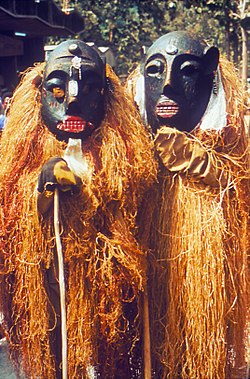 There
are two main types of traditional healers in African societies: the deciner
(sangoma) and the herbalist (inyanga). In essance these are shamans who are of
high social power and status within the societies, having a strong influence on
all elements, even politics. In these societies illnesses are believed to be as
a result of witchcraft, pollution or negation of the ancestors.
There
are two main types of traditional healers in African societies: the deciner
(sangoma) and the herbalist (inyanga). In essance these are shamans who are of
high social power and status within the societies, having a strong influence on
all elements, even politics. In these societies illnesses are believed to be as
a result of witchcraft, pollution or negation of the ancestors. Traditional healers in
How spells are cast
Through ritual and animal sacrifices, healers believe that the ancestors must be shown respect; they feel that this will bring them a trouble-free life and create harmony and strength between the living and the dead. They summon the ancestors through many types of rituals and potions: burning sacred plants like imphepho (Helichrysum petiolare), dancing, chanting, channeling or playing drums. Traditional healers will often give their patients muti—medications made from plant, animal and minerals—imbued with spiritual significance. These medicines often have powerful symbolism; for example, lion fat might be prepared for children to promote courage. There are medicines for everything from physical and mental illness, social disharmony and spiritual difficulties to potions for protection, love and luck.
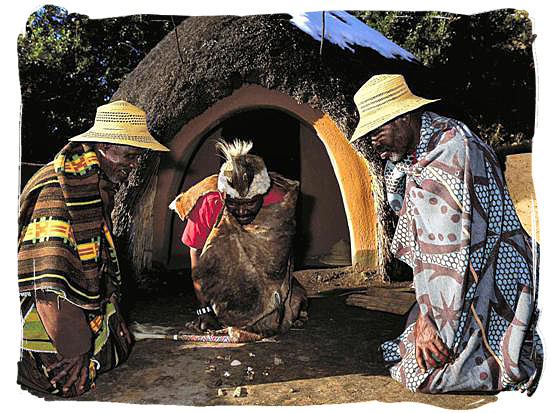 Sangoma is a Zulu term that is
used to describe the traditional healers, there are actually many different
types within this term referring to the different ways that they heal or cast
spells. An inyanga is concerned mainly with medicines made from plants and
animals, while a sangoma relies primarily on divination for healing purposes
and might also be considered a type of fortune
teller. In modern times, colonialism,
urbanisation,
apartheid
and cross-cultural mixing have blurred the
distinction between the two and traditional healers tend to practice both arts,
and the traditional healers can alternate between these roles by diagnosing
common illnesses, selling and dispensing remedies for medical complaints, and
divining cause and providing solutions to spiritually or socially centered
complaints.
Sangoma is a Zulu term that is
used to describe the traditional healers, there are actually many different
types within this term referring to the different ways that they heal or cast
spells. An inyanga is concerned mainly with medicines made from plants and
animals, while a sangoma relies primarily on divination for healing purposes
and might also be considered a type of fortune
teller. In modern times, colonialism,
urbanisation,
apartheid
and cross-cultural mixing have blurred the
distinction between the two and traditional healers tend to practice both arts,
and the traditional healers can alternate between these roles by diagnosing
common illnesses, selling and dispensing remedies for medical complaints, and
divining cause and providing solutions to spiritually or socially centered
complaints. In healing a sangoma's try’s to establish a balanced and harmless relationship between the afflicted patient and the spirits that are causing their illness. The healer intercedes between the patient and the world of the dead in order to make restitution. This is generally performed through divination- throwing the bones or ancestral channeling-, purification rituals, or animal sacrifice to appease the spirits through atonement.
Divination performed by Sangoma is the reading of the bones after they have been thrown. This will be one way that the Sangoma will access the ancestors and advice given by them. In a session, the Sangoma will determine what the affliction is and then either the patient or diviner throws bones on the floor, which may include animal vertebrae, dominoes, dice, coins, shells and stones, each with a specific significance to human life. One example of this is the hyena bone which signifies a thief and will provide information about stolen objects. After the bones have been thrown, it is believed that the ancestors determine how they fall and then the Sangoma reads and interprets them in relation to the patient’s life and how to resolve their problem. The Sangoma will then give the patient a course of medicine to take or referrer them to a herbalist.
Drumming and Rituals
Sangoma can also be translated as 'person of the drum' or 'the drumming one', as drumming is an important part of summoning the ancestors. During times of celebration the possessed sangoma is called to dance and celebrate their ancestors. The sangoma falls into trance and the ancestors will be channeled, which appears to be through episodes of convulsive fits. This is followed by the singing of ancestral songs. These songs are echoed back to the ancestor via the audience in a process of call and response. The possessed sangoma will then change into their traditional ancestral clothing and dance vigorously while others drum and sing in celebration.
The Tempest and Colonialism
George Lamming
George
Lamming is one of the writers that really discovered and explored the idea that
The Tempest is based on Colonialism and that this was a theme in the play. He
is a writer coming from Barbados born June 6, 1927, in 1950 he emigrated to
England and spent his time working in factory’s and even broadcasted for the
BBC. Lamming became a leader in a Caribbean renaissance in England
Lamming's writing career has encompassed several genres, gaining acclaim not simply for fiction but also poetry and critical work. His fiction has taken up the familiar
George Lamming looked at The Tempest in a new way. His 1960 collection of essays, The Pleasure of Exile, is a piece work that attempts to define the place of the West Indian in the post-colonial world, re-interpreting Shakespeare's The Tempest and the characters of Prospero and Caliban in terms of personal identity and the history of the Caribbean.
Evidence
“The Tempest has often been interpreted as a play about colonialism
primarily because Prospero comes to sycorax’s island, subdues her, rules the
land and imposes his own culture on the people of the land. Pushing the native
to the side he places himself at the helm of affairs. He displaces Caliban’s
mother and treats her as a beast. He has full control over everything on the
island. He makes Caliban work as his servant and calls him a thing of darkness.
Caliban is being dehumanized or treated as subhuman. This shows the colonizer’s
attitude of looking down on the colonized people. Caliban is seen as a
despicable entity. The whites looked down on the people of other color. Some
are born to dominate while others are born to be dominated. Caliban is treated
as inferior. The colonizer used words like light, knowledge and wisdom to refer
to himself while he used terms like darkness, ignorance and elemental to
describe the colonized. This binary opposition shows how Prospero as a colonizer
creates essences about the colonized people. Prospero sees himself as a ruler
carrying out the project of civilization mission. The way light dispels
darkness and knowledge dispels ignorance Prospero as a colonizer educates and
civilizes Caliban but without much success. The civilizing mission is always
accompanied by the politics of domination over the colonized. These elements
allow us to study the play in the light of colonialism. Moreover there are
bases that enable us to make a post colonial interpretation of the play. The
hatred towards the colonizer is very great and strong among the colonized.
Prospero manipulates everybody and every action in the play. Everybody on the
island is manipulated by Prospero the way a puppet master controls his puppets.
Caliban as a colonized wants to strike back on the colonizer. Caliban is
disobedient and creates problems for the colonizer. He attempts to rape Miranda
and it is a treat posed to the safety of the colonizer. He tells Prospero that
the land that prospero rules was forcefully taken away from his mother. These
attempts by Caliban to protest and resist the colonizer can support our
post-colonial interpretation of the play.”
I personally feel that I it is really important to look into the evidence that there is to support our concept as it is a way of bringing it to life and making it sure that we fully understand what is our take on the play so that we can understand how our characters fit into the concept, what it is saying to the audience and how we can say this message and connect with the audience through the facts presented to us in the play. It is also really interesting to see how there is truth in the concept of what we are researching and looking into and how such a theme could be seen distant from the play and from what Shakespeare intended but when you look at the evidence of what is presented to us and what Shakespeare create it shows us how real and truthful our concept is to the play.
When I was first reading The Tempest the slavery theme struck out to me and it was quite a clear, strong element of the play, Caliban and Ariel are the most obvious characters that represent slavery as they are being kept against their will under the rule of Prospero. However when you look deeper into the play I thought that Miranda's role also shows a sense of control as she is put under spells by Prospero and feel that this shows how she is manipulated as well and the could be linked back to slavery.
PEYOTE AND AYAHUASCA
As in our version of The Tempest Prospero is a Witch Doctor and instead of putting spells on people he uses drugs to control people and to make sure that he has the power. It is really important that we know what drugs would be used by him so that we can understand the effects that they have on people.
For those playing the natives it is important to have knowledge about these sort of drugs as they are a part of their society as they come into religion and medication, which forms the way that they live and the norms of their society. Such as in our society nowadays we understand about the normal medicines and would go to the doctors when ill, we have to understand that in our play the natives put the same amount of trust in the Witch Doctors as we do in our medical system, and we have to be able to exercise this trust in our performance.
Also for those playing the characters who come off of the boat from the main land, like my character, it is important to know and understand the effects of the drugs because if we get drugged in the course of the play it is crucial to know how that would effect the characters so that when acting on stage it can be truthful and not over dramatized, it allows us to understand how we would act when drugged on these drugs so that it can be real to the moment and not fake.
For those playing the natives it is important to have knowledge about these sort of drugs as they are a part of their society as they come into religion and medication, which forms the way that they live and the norms of their society. Such as in our society nowadays we understand about the normal medicines and would go to the doctors when ill, we have to understand that in our play the natives put the same amount of trust in the Witch Doctors as we do in our medical system, and we have to be able to exercise this trust in our performance.
Also for those playing the characters who come off of the boat from the main land, like my character, it is important to know and understand the effects of the drugs because if we get drugged in the course of the play it is crucial to know how that would effect the characters so that when acting on stage it can be truthful and not over dramatized, it allows us to understand how we would act when drugged on these drugs so that it can be real to the moment and not fake.
PEYOTE
Peyote
is a small, spineless cactus, whose principal active ingredient is the
hallucinogen mescaline. From earliest recorded time, peyote has been used by
natives in northern Mexico
and the southwestern United
States
Short term effects
Once
ingested, peyote can cause feelings of nausea before the desired mental effects
appear, which are altered states of perception and feeling. Other effects can
include increased body temperature, heart rate, blood pressure; loss of
appetite, sleeplessness, numbness, weakness, tremors. Effects can be different
during each use due to varying potency, the amount ingested, and the user’s
expectations, mood and surroundings. On some trips, users experience sensations
that are enjoyable. Others can include terrifying thoughts and anxiety, fear of
insanity, fear of death, or fear of losing control.
What are its long-term effects?
Some
users experience “flashbacks”, or hallucinogen persisting perception disorder
(HPPD), which are reoccurrences of hallucinations long after ingesting the
drug. The causes of these effects, which in some users occur after a single
experience with the drug, are not known.
Religion
Religion
Most formal peyote ceremonies mix drumming, singing, prayer, and stories as a means of offering thanks and as a way of sharing this blessing with the Creator and their fellow communicants. Deeply meaningful and highly personalized inspirational revelation is often a very important part of the individual's experience. Participants in such peyote "meetings" often grow in empathy and in friendship with the people who have shared the peyote night with them. Lifelong associations are made in this way.
The use of peyote in ceremonies among Mexican tribes was a well established tradition by the time of the European entrance into the new world. This pre-historical religious use eventually diffused into the North American regions. Along with this evangelistic migration came changes in the basic ceremonies associated with peyote.
Positive
|
Natural
|
Negative
|
feelings of insight
|
general change in
consciousness (as with most psychoactives)
|
nausea and/or
vomiting
|
brightening of
colours
|
loss of appetite
|
chest and neck pain
(in early stages of experience)
|
closed and open eye
visuals
|
change in body temperature regulation
|
shortness of breath
|
mood lift, euphoria
|
unusual thoughts
and speech
|
uncomfortable
changes in body temperature (sweating/chills)
|
increased giggling
and laughing
|
unusual focus on
either small details or large concepts; changes in meaning or significance of
experiences
|
confusion,
difficulty concentrating, problems with activities requiring linear focus
|
increase in energy
(stimulation)
|
mild to extreme
distractability
|
difficulty communicating
|
increased tactile
sensation
|
changes in
perception of time
|
inhibition of sex
drive
|
happy, dreamy
feelings
|
changes in
perception of "reality"
|
insomnia
|
feelings of hope or
rejuvination
|
changes in self control,
body tremors, urge to urinate
|
unpleasant or frightening visions
|
increased access to
spiritual ideation; deep esoteric experiences
|
unusual body
sensations (facial flushing, chills, goosebumps, body energy)
|
unwanted and
overwhelming feelings, depression, anxiety
|
ego softening
|
paranoia, fear, and
panic
|
Saturday, 30 March 2013
AYAHUSACA
Ayahuasca is a
traditional South American medicine brewed from a combination of several plants
that are legally available. Ayahuasca contains the potent hallucinogen DMT as
well as harmaline, an alkaloid that allows DMT to quickly cross the blood-brain
barrier. Many take ayahuasca for its vivid and realistic hallucinations and the
promise of insight into the mysteries of the mind.
Ayahuasca is a traditional South American medicine brewed from a combination of several plants that are legally available. Ayahuasca contains the potent hallucinogen DMT as well as harmaline, an alkaloid that allows DMT to quickly cross the blood-brain barrier. Many take ayahuasca for its vivid and realistic hallucinations and the promise of insight into the mysteries of the mind.
The effects of Ayahuasca normally take place about 15 to 60 minutes after ingestion. The peak of the effect will happen between 60 to 90 minutes after ingestion and might last another 2 to 6 hours. The after effect can often last for about 1-8 hours, dependant on the size of the dose taken. If a user ingests too much of the substance, he will just probably black-out and forget the entire experience. There have been no reports of anyone dying of overdose but theoretically and maybe in rare cases, allergic reaction to any of the ingredients from the substance can be fatal.
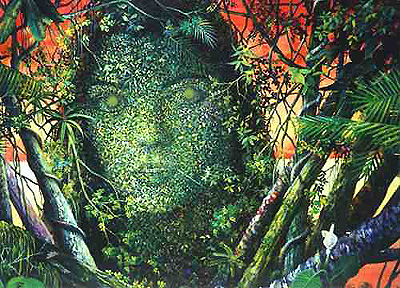
Ayahuasca typically produces dramatic
physical, mental, and emotional changes and when properly prepared and consumed
resulting in spiritual transformation. Shamans believe the ayahuasca plants’
living spirits, not their ingredients, are the true origins of healing
properties.
Physical
Effects
The most reported side-effect of ayahuasca is nausea, followed by intense repetitive vomiting. For some, the vomiting comes early, while for others it occurs during the hallucinations. In ritual settings in
Mental Effects
Some users experience profuse sweating, tremors, increased blood pressure and heart rate. These effects are most likely due to DMT intoxication, which is also known in a pure state to cause hypertension, agitation, dilated pupils, dizziness and muscular in-coordination. However neither ayahuasca, nor DMT, are addictive.
It is described as a substance that creates the most profound of all psychedelic experiences. It has powerful hallucinogenic alkaloids that induce the experience. The use of other additives makes up different types of effects, but the most affected sense is vision during these psychedelic experiences. The experience is describes as a long sequences of dream-like imagery. This can be translated to manifestations of spirit helpers, demons and deities, geometrical pattern and tigers, birds and reptiles. They believe that they can see events at a great distance. They also experience sensations of flying and even of their own death. With these kinds of experiences, it explains why they used it for religious purposes. There have been no known long term effect on mental health when it comes to continuous use of Ayahuasca.
Ayahuasca, like other hallucinogens such as LSD and psilocybin, can sir up profound emotional states, including anxiety, fear and paranoia while, at the same time, providing profound depersonalization, so that the user may be more receptive to emotionally charged memories and past traumas. This profound and unsettling effect has attracted medical doctors to research the psychiatric value of ayahuasca. However, if ayahuasca is not taken in a safe environment with trained guides, these effects could be destabilizing.
It can also be used as a substance to cure depression, addiction and anxiety disorders. The only great concern in the use of Ayahuaca is a hypertensive crisis brought about by the raising levels of tyramine in the blood. Hypertensive crisis might lead to hemorrhaguc stroke, rapture of pre-existing aneurysm, and myocardial infraction that can all result to death of the user.
Ayahuasca and Religion
The use of Ayahuasca has been deeply connected to various religions that it influenced the creation of the religions themselves. There are also religions that use Ayahuasca in many of its ceremonies. These religions are usually Shamanic and deeply integrated with Christianity. Both of these religions have members and churches throughout the world.
The Santo Daime religions’ beliefs and ceremony is loosely based on some religions. It is syncretic spiritual practice that tries to incorporate Folk Catholicism, Kardecist Spiritism and to a lesser extent African animism and South American Shamanism. It has little basis in written text and the teachings are loosely based experientially through the singing of ostensibly divinely inspired hymns. Its ritual mainly involves the consumption of Daime which is generally known as Ayahuasca. The ceremonies last from a couple to many hours and consist of drinking Daime. They are either sitting or dancing while singing hymns and shaking maracas, or sitting in silent “concentration”. They sometimes also include healing sessions in their ceremonies.
União do Vegetal or UDV is a Christian religion that is based on the used of Hoasca (Ayahuasca). The Hoasca is the vegetal that is mentioned in the groups’ name. It promotes a spiritual evolution based on the search for self-knowledge and mental concentration. It is marked by its commitment of centralized authority, legitimation of the state, and organized expansion. The members usually consume the Hoasca in group settings.
The
TYPES OF AFRICAN DANCE
This
is the most common form of African folk dance and most of the indigenous tribes
use this type of dance to call a spirit, that are worshipped by many tribes.
This dance can also be used during war or in a drought as it is believed that
it will bring them some good fortune.
Warrior
Dance
The warrior dance is a typical African dance form that is a fusion of warfare movements and artistic movements of the body. This dance form consists of many aggressive movements like “stabbing” with drum beats.
The warrior dance is a typical African dance form that is a fusion of warfare movements and artistic movements of the body. This dance form consists of many aggressive movements like “stabbing” with drum beats.
Coming of Age Dance
This dance form is meant to celebrate the coming of age of a young person. “Coming of age” is an important ritual in many African tribes.
This dance form is meant to celebrate the coming of age of a young person. “Coming of age” is an important ritual in many African tribes.
Welcome Dance
The welcome dance is performed to greet guests.
This dance is meant to exhibit the tribe’s culture as well as to express the
feelings and happiness of the tribe due to the arrival of the guests
Love Dance
The love dance is also known as the celebration dance. This type of dance is performed to celebrate different festivals and happy events like weddings, tribal rituals and anniversaries. Trained dancers perform this dance in front of other tribal members.
The love dance is also known as the celebration dance. This type of dance is performed to celebrate different festivals and happy events like weddings, tribal rituals and anniversaries. Trained dancers perform this dance in front of other tribal members.
AFRICAN DANCE

History
African dance is
polycentric, which sets it apart from most other dance traditions in the world.
This means that the dancer has to isolate different parts of their body into
separate areas of movement and each area should be able to move to the
different rhythms within the music.
Most African villages
had a "dance master" who taught the members of the tribe from a very
young age how to perform the various dances. It was very important that these
dances be performed exactly as taught, with no room for improvisation or
ornamentation until complete mastery of the form was achieved. While almost all
of the dances are polycentric in some way, different areas of Africa
have very different dances. The Masai are known for leaping high in the air,
for example, while the Kalabari emphasize hip motions. In all cases, the
movements are very precise, and the same dances you see today have most likely
been danced the same way for centuries.
African
Dance and the Slave Trade
The 1500s saw
the beginning of slave labour as Africans were brought to North and South
America and the
Enslaved Africans that
were taken to colonies in South America, the Caribbean, Spain and Portugal
were given much more freedom to carry on their dance traditions than those who
were brought to North America . Sadly, many of
the North American slave owners prohibited Africans from performing most of
their traditional dances.
However, the importance and spirit of dance were not stopped by this restriction. African slaves found ways to adapt their dancing and continue their traditions in secret, causing changes in the dances. For example, since slaves were prohibited from lifting their feet, they created moves that included shuffling the feet and moving the hips and body.
 Music
Music

Music
in African dance is really important. The drum is one way to set the mood and
brings everyone together as a community. There are also many other instruments
used as well, such as gourds strung with beads. Clapping, stamping feet, and
most of all singing also create rhythmic music for African dance. As dancers
move in an expression of their inner feelings, their movements are generally in
rhythm to the music. It is the sound of the music and the rhythms that are
played that provide the heartbeat of the dance. The music and dance are
considered inseparable, two parts of the same activity.
African music is a huge part of African culture so this research is really important as it gives me an insight to the world of the play that we are doing and the concept that we as a company are trying to give to the audience. African dance is also used a lot in trances and rituals and the music helps people to get lost in the trances. In our version of The Tempest, Prospero is not a magician but a witch doctor and puts spells on the other characters by drugging them, those characters then go into a trance like state, by looking at African dance it shows us how they loose themselves and how they act when in a trance-like state. By studying and experiencing African Dance as actors we would be able to go back into that state and to bring that to life on stage and have something to relate to when we need to connect and be real to that state.
Also African Dance is all about the body and connecting to the rhythm of your body and letting that be in control and lead your movement not your mind. This is really important for our characters, especially for the characters that are originally from Africa or Sierra Leone as this would be natural movement for them, meaning that in general they would be more connected and in tune with their body, this cold affect the way that they move or walk or the way that they hold themselves. Also just as actors using African Dance is a really good way to connect with our bodies and to be able to understand and feel our bodies so that they can become a part of our characterisation and a way of letting that lead our acting and consequently becoming our characters.
As our piece of theatre is about colonialism and the start of the end of slavery and even more so questioning whether this was the end of slavery or just another branch of it. Because of this it is really important to understand how slavery changed African Dance as this form of dance will be the one that we will be taken part in as our piece is just post slavery. Also it helps us to get an idea of the different ways that people were suppressed in slavery, it shows how far the suppression goes into their culture.
Subscribe to:
Comments (Atom)