Ayahuasca is a
traditional South American medicine brewed from a combination of several plants
that are legally available. Ayahuasca contains the potent hallucinogen DMT as
well as harmaline, an alkaloid that allows DMT to quickly cross the blood-brain
barrier. Many take ayahuasca for its vivid and realistic hallucinations and the
promise of insight into the mysteries of the mind.
Ayahuasca is a traditional South American medicine brewed from a combination of several plants that are legally available. Ayahuasca contains the potent hallucinogen DMT as well as harmaline, an alkaloid that allows DMT to quickly cross the blood-brain barrier. Many take ayahuasca for its vivid and realistic hallucinations and the promise of insight into the mysteries of the mind.
The effects of Ayahuasca normally take place about 15 to 60 minutes after ingestion. The peak of the effect will happen between 60 to 90 minutes after ingestion and might last another 2 to 6 hours. The after effect can often last for about 1-8 hours, dependant on the size of the dose taken. If a user ingests too much of the substance, he will just probably black-out and forget the entire experience. There have been no reports of anyone dying of overdose but theoretically and maybe in rare cases, allergic reaction to any of the ingredients from the substance can be fatal.
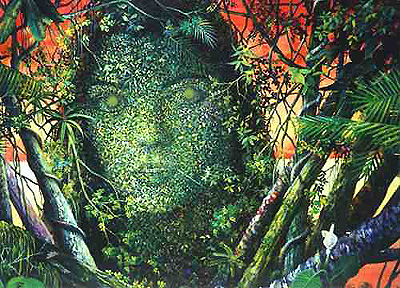
Ayahuasca typically produces dramatic
physical, mental, and emotional changes and when properly prepared and consumed
resulting in spiritual transformation. Shamans believe the ayahuasca plants’
living spirits, not their ingredients, are the true origins of healing
properties.
Physical
Effects
The most reported side-effect of ayahuasca is nausea, followed by intense repetitive vomiting. For some, the vomiting comes early, while for others it occurs during the hallucinations. In ritual settings in
Mental Effects
Some users experience profuse sweating, tremors, increased blood pressure and heart rate. These effects are most likely due to DMT intoxication, which is also known in a pure state to cause hypertension, agitation, dilated pupils, dizziness and muscular in-coordination. However neither ayahuasca, nor DMT, are addictive.
It is described as a substance that creates the most profound of all psychedelic experiences. It has powerful hallucinogenic alkaloids that induce the experience. The use of other additives makes up different types of effects, but the most affected sense is vision during these psychedelic experiences. The experience is describes as a long sequences of dream-like imagery. This can be translated to manifestations of spirit helpers, demons and deities, geometrical pattern and tigers, birds and reptiles. They believe that they can see events at a great distance. They also experience sensations of flying and even of their own death. With these kinds of experiences, it explains why they used it for religious purposes. There have been no known long term effect on mental health when it comes to continuous use of Ayahuasca.
Ayahuasca, like other hallucinogens such as LSD and psilocybin, can sir up profound emotional states, including anxiety, fear and paranoia while, at the same time, providing profound depersonalization, so that the user may be more receptive to emotionally charged memories and past traumas. This profound and unsettling effect has attracted medical doctors to research the psychiatric value of ayahuasca. However, if ayahuasca is not taken in a safe environment with trained guides, these effects could be destabilizing.
It can also be used as a substance to cure depression, addiction and anxiety disorders. The only great concern in the use of Ayahuaca is a hypertensive crisis brought about by the raising levels of tyramine in the blood. Hypertensive crisis might lead to hemorrhaguc stroke, rapture of pre-existing aneurysm, and myocardial infraction that can all result to death of the user.
Ayahuasca and Religion
The use of Ayahuasca has been deeply connected to various religions that it influenced the creation of the religions themselves. There are also religions that use Ayahuasca in many of its ceremonies. These religions are usually Shamanic and deeply integrated with Christianity. Both of these religions have members and churches throughout the world.
The Santo Daime religions’ beliefs and ceremony is loosely based on some religions. It is syncretic spiritual practice that tries to incorporate Folk Catholicism, Kardecist Spiritism and to a lesser extent African animism and South American Shamanism. It has little basis in written text and the teachings are loosely based experientially through the singing of ostensibly divinely inspired hymns. Its ritual mainly involves the consumption of Daime which is generally known as Ayahuasca. The ceremonies last from a couple to many hours and consist of drinking Daime. They are either sitting or dancing while singing hymns and shaking maracas, or sitting in silent “concentration”. They sometimes also include healing sessions in their ceremonies.
União do Vegetal or UDV is a Christian religion that is based on the used of Hoasca (Ayahuasca). The Hoasca is the vegetal that is mentioned in the groups’ name. It promotes a spiritual evolution based on the search for self-knowledge and mental concentration. It is marked by its commitment of centralized authority, legitimation of the state, and organized expansion. The members usually consume the Hoasca in group settings.
The

No comments:
Post a Comment